Resources

Helpful Guides & Industry Insights

Practical knowledge for nail tool buyers — selection tips, specification explanations and market know-how. Each guide answers a real purchasing question we hear from brands, salons and distributors, so your first order is a lower-risk one.
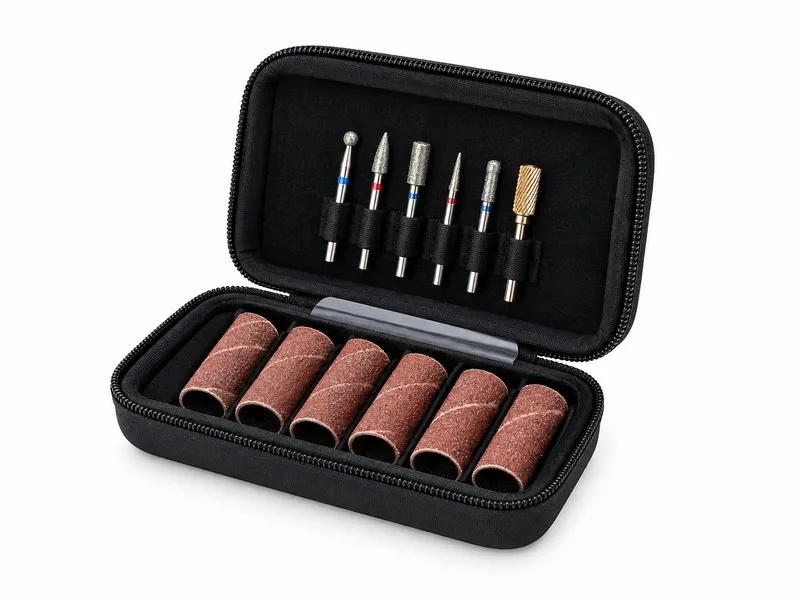
Nail drill bit kit and abrasives — the assortment a first order typically starts from
Guide 1

Nail Tool Buying Guide: 5 Questions to Ask Before Your First Order

Sourcing nail drill bits and abrasives internationally is mostly about de-risking your first order. The suppliers worth building on answer these five questions clearly and in writing — before you pay a deposit.

  1. Which product families does my market actually need?

    Most buyers start with three core lines: carbide drill bits (durable, fast removal), diamond burs (precision, natural-nail safe at fine grits), and sanding bands (disposable, hygienic). Add kits and sets only once you know which combinations your customers repurchase.

  2. What specs must be confirmed in writing?

    Lock down head shape, grit level, shank size (3/32″ is the e-file standard), material and any coating. "Same as last time" is not a specification — a one-page spec sheet prevents the most common quality disputes.

  3. What are MOQ and sample terms?

    Ask for the real minimum order per SKU, not the headline MOQ, plus whether samples are free or charged and credited against the first bulk order. This decides how many SKUs you can test without over-committing cash.

  4. How is quality controlled before shipment?

    Confirm the inspection step: in-process checks, final AQL sampling, and what happens if a batch is out of tolerance. Documented QC is what separates a trading company from a manufacturing partner — see how we control quality.

  5. What branding and packaging options exist?

    If you plan to sell under your own name, the OEM / ODM and private label routes should be discussed up front so tooling and lead times are quoted correctly.

Request a Quote → See OEM / ODM options

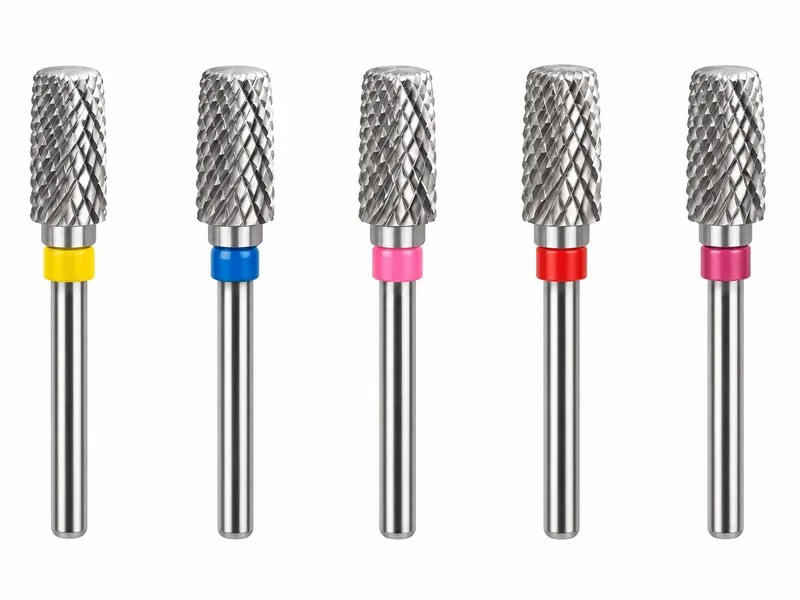
Assorted nail drill bit head shapes — barrel, cone, ball, flame and needle
Guide 2

Drill Bit Shapes & Uses: Matching Head Shape to the Job

The head shape determines what a bit can safely do. Stocking the right mix — rather than one "all-purpose" bit — is the difference between a professional assortment and a confusing one.

  • Barrel (flat or rounded): the workhorse for surface work and shortening enhancements. The rounded barrel is safer near the cuticle because it has no sharp edge.
  • Cone / tapered barrel: precision shaping, sidewalls and the cuticle line where control matters most.
  • Ball: gentle cleaning under the nail and around the cuticle; a staple for safe, detail-oriented work.
  • Flame / teardrop: small areas and fine detailing where a full barrel is too bulky.
  • Needle: tight spots and intricate correction work; used sparingly and at low speed.

Grit decides aggression (see Grit Selection Basics); shape decides reach. Pair a coarse barrel for bulk removal with a fine cone for finishing, and most salon tasks are covered. Browse the full range via the Products menu in the header.

View Carbide Bits →

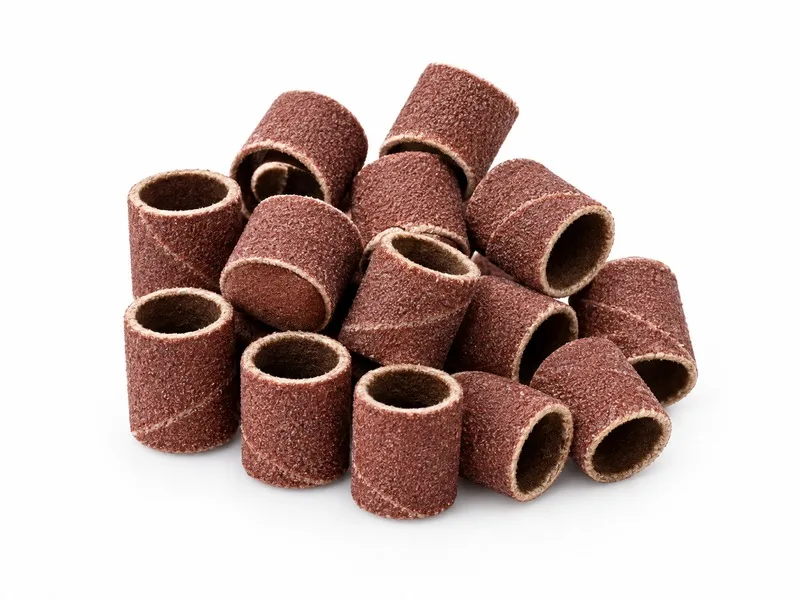
Sanding bands in grit levels from coarse to fine
Guide 3

Grit Selection Basics: Coarse, Medium, Fine — and When to Use Each

Grit is the number of abrasive particles per square inch: lower numbers are coarser and remove material faster; higher numbers are finer and refine the surface. Matching grit to the task protects the nail and speeds up the service.

  • XX-Coarse (under ~80): fast product removal only — never on the natural nail. For experienced techs shortening thick acrylic or hard gel.
  • Coarse (80–100): bulk reduction and shortening enhancements; still too aggressive for natural nail plates.
  • Medium (120–180): surface refinement, shaping and blending where control is needed.
  • Fine (180–240): natural-nail prep and gentle finishing — the safe everyday range for bare nails.
  • Extra-fine / buffer: shine and polish prep, no material removal.

Rule of thumb: the closer you are to the natural nail, the finer the grit. If you are unsure which grits to stock for your market, tell us your use case and we will suggest a starter mix.

Ask for a Starter Mix →

Frequently Asked Questions

Quick answers to the questions buyers ask us most. Clear on these and your first order is far lower-risk.

What is the difference between carbide and diamond nail bits? +

Carbide bits are metal, cut fast and last longest — ideal for removing acrylic and gel. Diamond bits are abrasive-coated, run cooler and are preferred for natural-nail work and fine detail. Most salons stock both.

What shank size do most e-file nail bits use? +

The industry standard for professional e-files is a 3/32″ (2.35 mm) shank. Confirm your machine's collet size before ordering so bits seat correctly.

How do I choose grit for natural nails vs enhancements? +

Use fine grits (180–240) on the natural nail and medium-to-coarse (80–180) only on artificial enhancements. Never use coarse or XX-coarse bits on bare nails.

Can I private label these tools? +

Yes. Branding, laser engraving and custom packaging are available through our OEM / ODM and private label programs. MOQ and lead time depend on the SKU and decoration.

What is a sensible MOQ for a first order? +

We recommend starting with a smaller mixed-SKU batch to validate the assortment, then scaling up. Exact minimums vary by product family — request the current MOQ sheet.